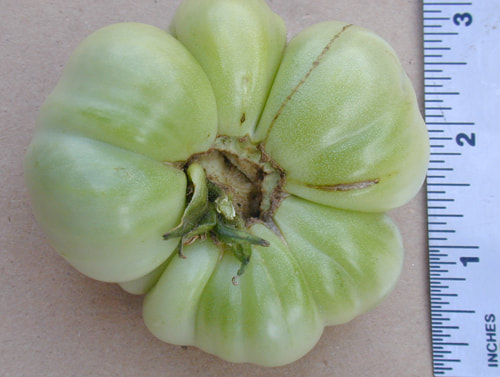
Catfacing is a term used to describe a specific type of tomato fruit deformity or malformation.
The term refers to a condition where the fruit develops unusual and distorted shapes, often resembling a cat's face or having deep indentations and irregular lobes.
The severity of catfacing can vary, ranging from minor cosmetic blemishes to more significant deformations that affect the overall appearance and quality of the tomato.
Catfacing is typically caused by environmental factors that affect tomato plants during their early development. Some common causes include cold air temperatures, too-cold soil, fluctuating temps, and exposure to certain herbicides or stress during flowering and fruit set.
These conditions can disrupt the normal growth and development of the tomato fruit, resulting in irregularities in shape and appearance.
The best way to prevent catfacing in your tomatoes
Don't transplant your tomato seedlings or store-bought tomato plants until the weather is good and warm and expected to stay that way.
Here's a BFGC article on more ways to prevent this issue in your tomatoes.
The severity of catfacing can vary, ranging from minor cosmetic blemishes to more significant deformations that affect the overall appearance and quality of the tomato.
Catfacing is typically caused by environmental factors that affect tomato plants during their early development. Some common causes include cold air temperatures, too-cold soil, fluctuating temps, and exposure to certain herbicides or stress during flowering and fruit set.
These conditions can disrupt the normal growth and development of the tomato fruit, resulting in irregularities in shape and appearance.
The best way to prevent catfacing in your tomatoes
Don't transplant your tomato seedlings or store-bought tomato plants until the weather is good and warm and expected to stay that way.
Here's a BFGC article on more ways to prevent this issue in your tomatoes.
It's important to note that catfacing is primarily a cosmetic issue and does not pose any health risks. Tomato plants that produce catfaced fruits are still generally healthy and can continue to produce normal tomatoes alongside the affected ones.
Better Homes & Gardens has a great article about this condition here.
Photo credit: N. Bell, 2004 from the Pacific Northwest Pest Management Handbook
Better Homes & Gardens has a great article about this condition here.
Photo credit: N. Bell, 2004 from the Pacific Northwest Pest Management Handbook
While catfacing does not affect the taste or nutritional value of the tomato, it can make them less visually appealing and challenging to use in certain culinary applications, such as slicing or presenting them whole. The flavor and texture of the affected tomatoes are usually unaffected, and they can still be used for cooking, sauces, or other processed tomato products.